
Steel making process – two options
DRI-grade pellets provide a clean, low-residual iron unit allowing EAFs to produce virgin, high-end and even specialist steels while maintaining low emissions. EAF market share is expected to increase from 29% in 2025 to 40% in 2030, and 50% by 2050.
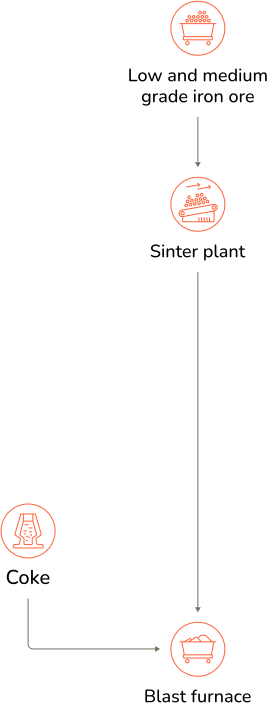
- Blast oxygen furnace (BOF) steel making route, accounting for ~70% of global steel production
- EAF route accounts for ~30% of global steel production, utilising DRI as a source of pure units and scrap to produce steel products
Blast oxygen furnace
Electric arc furnace

Recent metallurgical tests confirmed Zanaga’s ability to produce DRI grade pellet feed concentrates (more than 68% Fe with low impurities). The achievement of this milestone is very significant for the Project, enhancing its strategic attractiveness and economic potential.
Zanaga is well-placed in combined scale and quality. Our large scale orebody supports 30+ year mine life at 30Mtpa and our ability to achieve high-grade DRI pellet feed has the potential to transform the economics of our project.
DRI-Grade Iron Ore Demand
DRI-grade iron ore generally contains over 67% Fe and very low levels of impurities such as silica and alumina. As global grades decline, only a small proportion of seaborne ore meets DRI standards.
Global policy changes and the push for low-carbon steel are reshaping the steel industry. As carbon pricing favours cleaner methods, sectors like automotive, construction, and energy are demanding low-CO2 materials to meet decarbonization goals.
DRI-EAF provides a cleaner method of steel production, with a pathway for using hydrogen instead of natural gas, thereby further reducing emissions. As more producers adopt it, demand exceeds supply, raising prices. Independent analyses suggest DRI-grade pellet feed will remain scarce this decade unless new high-grade ore and pelletizing projects are initiated.
Structural growth
DRI-EAF is gaining share as the preferred route to lower‑carbon steel.
Real scarcity
DRI‑grade pellet feed is constrained; quality ore bodies are rare and valuable.
Premium pricing
DRI products trade at sustained premiums, underpinned by policy, customer demand and limited supply.
Clear catalyst path
Each tonne of DRI‑grade supply directly enables premium EAF steel and measurable CO₂ abatement.